
Foundation raising in Upland CA - a level house and a fix for what made it settle
Doors sticking, cracks over the doorframes or floors that slope? We find why your house settled, then bring it back to level.
- Licensed and fully insured.
- Free quotes on site.
- Expect a reply within 1 business day.
What does foundation raising involve for an Upland house?
Foundation raising brings a settling house in Upland back to level, either by shimming or replacing the piers under a pier-and-beam house from the crawl space or by lifting a slab on piers driven down to load-bearing soil, the firm ground that can carry the weight of the house.
Most people call me after months of a door that won't latch or a crack that keeps creeping up from a doorway, and they want to know how big a job they're looking at. That comes down to whether the house sits on a slab or on pier and beam, how many piers it takes to hold it and what made it settle in the first place, because a slab lift is a bigger job than shimming and a drainage problem has to be handled alongside the lift. Those same things set how long the work runs, and your estimate lays out the steps and what's included so you can see both before you decide anything.
How can you tell your house is settling?
Doors and windows sticking
A door that used to swing shut now rubs at the top corner or won't latch, and a window fights you on the way up. That usually means the frame has been pulled out of square as one part of the house dropped, and the longer it goes, the more doors join in.
Cracks over doors and windows
Diagonal cracks running up from the corners of doorways and windows, inside on the drywall or outside in the stucco, usually point to movement under the house rather than a bad patch job. Waiting tends to mean wider cracks and more patching once the house is level again.
Floors that slope
A ball rolls to one side of the room, furniture leans, or a gap opens up under the baseboard. That's usually one section of the house sinking faster than the rest, and the further it drops, the more the house has to be lifted to bring it back.
How we handle foundation raising
I start by measuring the floors to see where the house dropped and by how much, then I go looking for why, checking the drainage and how the ground sits against the foundation, because a lift that ignores the cause tends to bring us back to the same spot. On a pier-and-beam house our crew works from the crawl space, shimming the piers that sank or replacing them when shims won't do, and on a slab we dig along the outside, drive piers down to load-bearing soil and lift the slab back toward level from them. Dealing with the cause is part of the plan, and before any of it starts I tell you what's in our scope and what isn't, like touching up drywall, trim and paint, which most contractors leave out and you'll want to budget for separately.
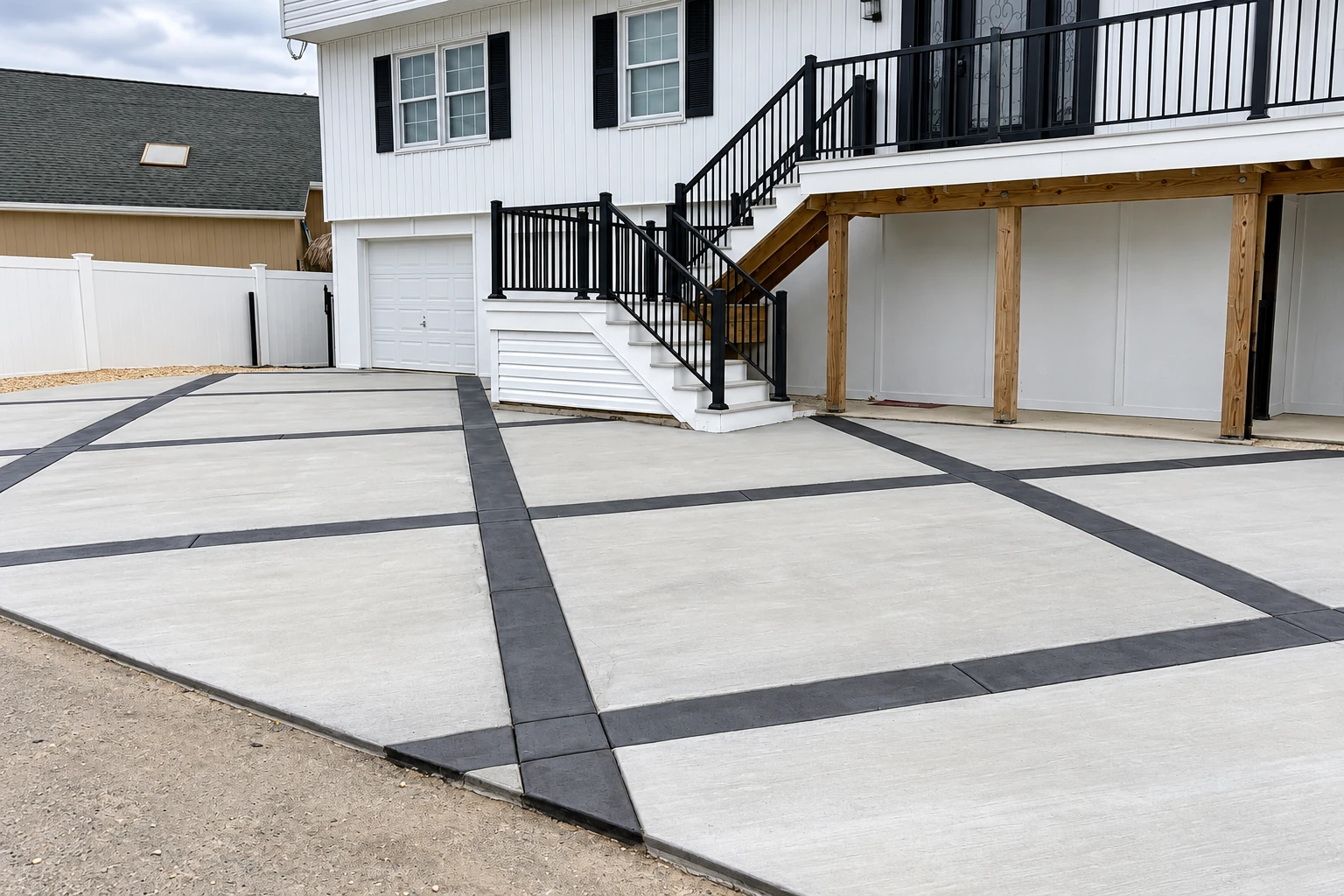
Leveling usually touches the concrete around the house too. If piers have to go in where a walk or patio meets the foundation, we use concrete cutting to open that section and pour it back afterward, and if the driveway sank and cracked along with the house, concrete driveway building is how we replace it once the house is back to level.
Shimming a pier-and-beam house
This suits a house with a crawl space whose piers have settled, because the crew can reach them from underneath and bring the floor back up without digging around the outside. If a pier itself is failing, it gets replaced instead of stacked with more shims.
Lifting a slab on piers
This suits a house built on a concrete slab, since the way to raise it is from piers driven down to load-bearing soil along the edge. Helical piers cost more each than steel push piers, so the type of pier is something we go over at the estimate.
Get a free on-site estimate for leveling your house
Send the form and expect a reply within one business day. I'll set a time to come out, look at the house and answer your questions, with no pressure to book.
(909) 694-4021- Based in
- Upland, CA 91786
- Hours
- Mon–Fri: 6 AM–10 PM, Sat–Sun: 7 AM–11 PM
What happens after you call about leveling your house in Upland?
Here's how a leveling job runs from your first call to the final walk-through, so you always know what comes next and who you'll hear from.
Call and set a visit
You call or send the form, and I come out to look at the house, hear what you have in mind and answer your questions right there. Mention when you first noticed the doors or cracks, because that helps me read how the house has been moving.
Get your written estimate
You get a written estimate that lays out each step and what's included, so the scope is on paper before you decide. Anything outside our scope is spelled out there too.
Schedule and do the work
We pick a date that works for you and keep you posted as the work moves along. The city allows construction on weekdays from 7 a.m. to 6 p.m., so that's when you'll hear our crew digging and lifting.
Walk the finished job
When the house is back to level, we walk it with you and check the doors and floors together. You see for yourself how things close and sit before we call it done.
Why Upland homeowners call D&K Upland Concrete to level a house
I'm on site for the lift
I'm on site with our crew of finishers when we do the work, not just at the estimate. That way the person who made your plan is the one watching it happen and answering your questions as they come up.
Licensed and fully insured on every lift
We're licensed and fully insured, which matters when a crew is digging along your foundation and raising the house. California licenses the raising and underpinning of houses as its own kind of contracting, apart from repairs to the rest of the house.
Started in Upland in 2023
I started this business in Upland in 2023 after years scheduling crews for a busy construction company and learning the trade from the finishers I sent out. That's why every job here gets a clear plan before anyone picks up a shovel.
Finding why your house moved matters as much as the lift itself. Ask for an estimate and I'll start there with you.
Foundation raising, permits and settling ground in Upland
The permit question gets settled before we lift anything. The City of Upland requires a building permit before most types of construction, so I'll tell you at the estimate whether your job needs one, and we handle the application with the city's building office.
Across San Bernardino County, ground sinking from groundwater pumping, long droughts and the underlying geology can crack the ground and settle foundations unevenly, so when a house has moved, I don't assume the house is the whole story. Some soils also swell and push hard as they soak up sprinkler water or rain, and one soil guide suggests watering the yard in moderation but consistently. On jobs here and in Ontario and Rancho Cucamonga, we often find a sprinkler or downspout soaking one side of the foundation, and moving that water is part of how we deal with the cause.
Questions about foundation raising in Upland
How much does it cost to level a house in Upland?
Leveling a whole house across the US usually costs about $3,500 to $30,000 per job, so treat that as the wide market range, not a price for your house. Slab homes cost more than pier-and-beam homes because the slab has to be lifted on piers driven to load-bearing soil, and underpinning is priced per pier, so the pier count drives the total. Your written estimate shows the steps and what's included for your house.
Can we stay in our house while it's being leveled?
Usually, yes, most owners stay home through the whole job. Slab work is noisy, though, and involves digging around the outside of the house, so plan on noise during working hours and an open trench along the edge until we close it up.
How long does foundation raising take?
Shimming a pier-and-beam house usually takes 1 to 3 days, and underpinning a slab usually takes 3 to 7 days, depending on how many piers go in. Those are typical figures, and I'll walk you through the plan for your house at the estimate.
How do I keep my house from needing leveling again?
Deal with the cause along with the lift, because on stable soil a house that's leveled properly shouldn't need it again. A house that keeps needing it still has its cause in place, such as drainage soaking the soil or settling that called for piers and got shims instead. Checking with a level each year afterward shows whether it's holding, and movement that returns within a few seasons means the cause is still active.
Can a sunken slab be raised back to exactly where it was?
Not always, because a concrete slab sometimes can't come back to the exact grade or position it held before. I'd rather we settle what result to expect before work starts than have you surprised at the end, so we go over it at the estimate.
Should I level one corner or my whole house?
If the settling is limited to one corner, leveling just that corner costs considerably less than lifting the whole footprint. Whether partial leveling fits depends on how the rest of the house measures and what made that corner drop, which is what I check when I come out.
Other concrete work that comes up with leveling
Concrete cutting
Saw-cutting lets us reach the foundation through a patio, walkway or garage floor with a straight, clean edge instead of a jagged hole.
Concrete driveway building
A driveway that dropped along with the house can tip water toward the garage, and a new slab on a packed base gives it somewhere better to go.
Cities we serve for foundation raising
D&K Upland Concrete is based in Upland, California, and we level houses there and in the cities around it, including Ontario and Rancho Cucamonga. The 12 cities below each have their own page, and they aren't the only places we work.
Upland, CA
Book a look at your settling house
Call (909) 694-4021 or send the form, and tell me whether your house sits on a slab or on pier and beam and when it was last leveled, so I come out knowing where to start.